Bookkeeping for Real Estate Investors: 9 Essential Practices for Better Financial Control
Table Of Contents
Toggle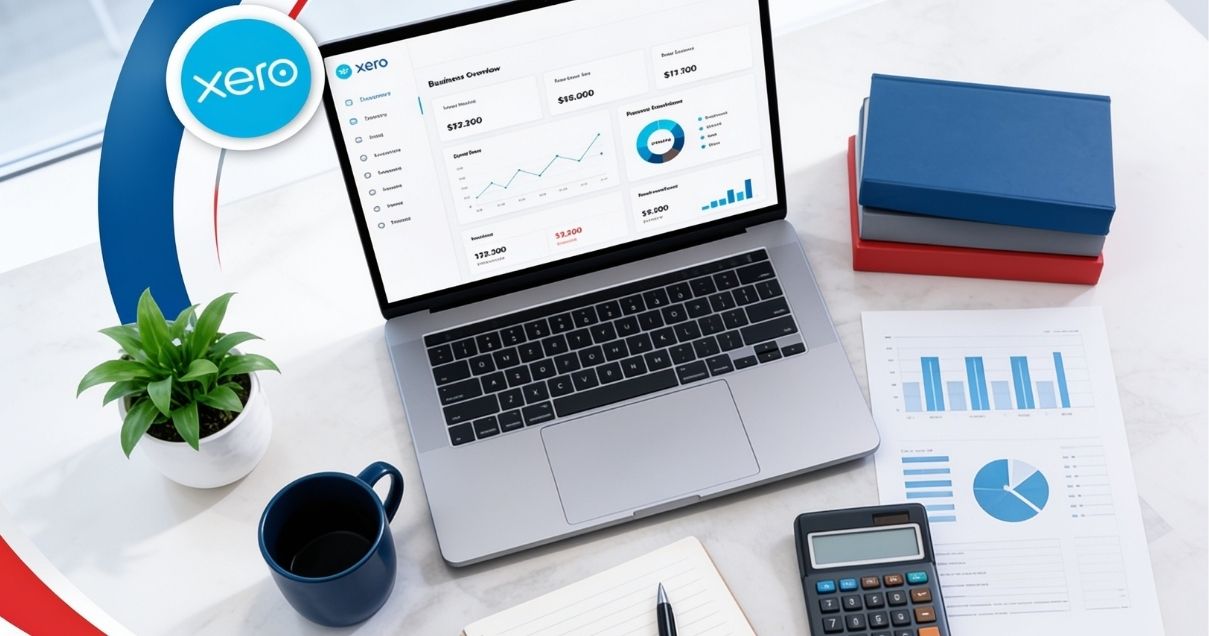
You’re three quarters into the year. Things are moving. Someone asks what your net cash position looks like right now, not last month, right now. And the honest answer is: you’d need to call your bookkeeper, wait a day, and hope the number they give you isn’t from a spreadsheet nobody’s touched in two weeks.
That gap between what’s happening in your business financially and what you can actually see is what Xero Bookkeeping Services close. IMCA (Indian Muneem Chartered Accountants) delivers these services to businesses in the US, UK, Australia, and New Zealand. This blog covers what that work looks like in practice, why it differs from what most businesses are running, and why the outsourcing model IMCA operates isn’t a compromise. For a lot of SMEs, it’s genuinely the better option.
Xero is cloud accounting software. That part most people know. Xero Bookkeeping Services as a managed offering is a different thing entirely.
When you bring in a professional team for Xero bookkeeping, they take ownership of the platform on your behalf. Setting up your chart of accounts, connecting bank feeds, categorizing transactions, reconciling accounts, managing invoices and bills, processing payroll, delivering financial reports on a schedule that actually means something. It’s the full function, run by people who do this work every day, not just access to the tool.
The cloud setup is what makes this work. Your bookkeeper, your accountant, and you are all inside the same live file. When something gets reconciled, you can see it. When you want to check your P&L, you log in and run it. That shared visibility is what makes outsourced Xero bookkeeping a legitimate arrangement in a way that emailing spreadsheets back and forth never was.
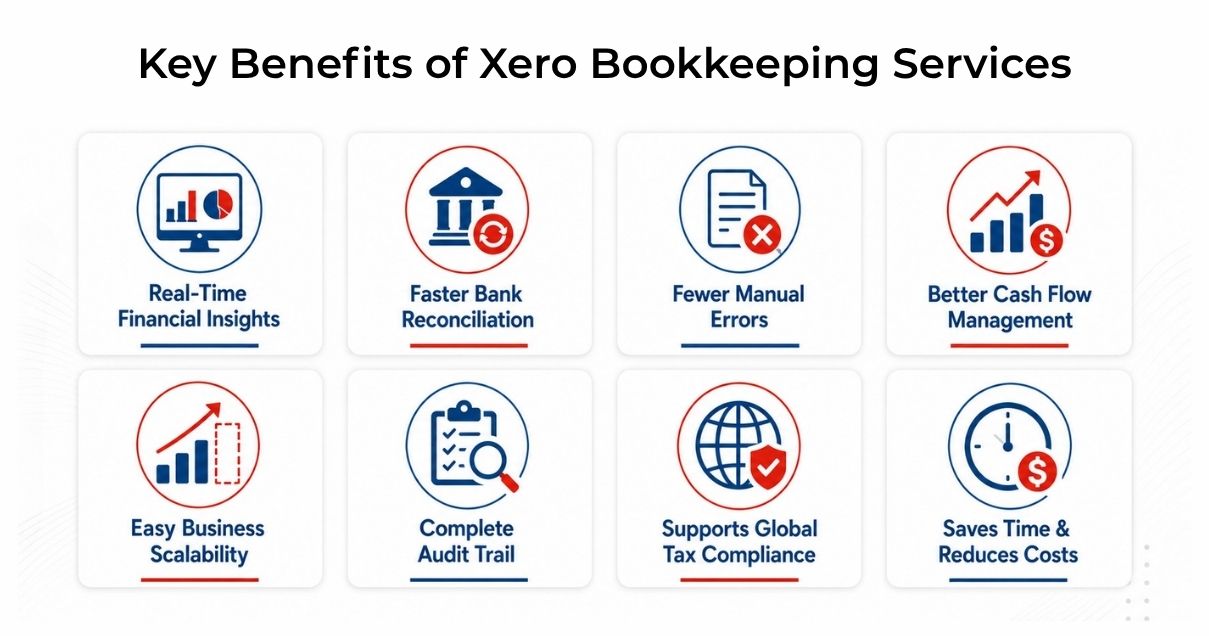
The clearest one is visibility. Your financial dashboard reflects what’s in your accounts, updated continuously through the bank feed. You’re not working from a report that’s three weeks old. That current picture changes how you make decisions, especially on cash flow.
Error rates fall because the manual steps that introduce mistakes are largely gone. Bank feeds pull transactions in automatically. Automated bank reconciliation matches them against your records. Your bookkeeper’s time goes toward review and judgment, not repetitive data entry.
Growth doesn’t require adding headcount on the bookkeeping side. The platform handles the transaction load, and your outsourced team adjusts as needed. Every transaction is timestamped and logged, so you have a complete, verifiable record for any audit or lender review.
Xero for bookkeeping across multiple jurisdictions means GST in New Zealand, VAT in the UK, BAS in Australia, and sales tax in the US are all managed within the same platform, structured to each market’s requirements.
Also Read: Outsourced Bookkeeping Services vs In-House Bookkeeping: Which One Is Right for Your Business?
Traditional bookkeeping runs on a lag. Receipts pile up, get entered at month end, then reconciled against statements sometime after that. By the time a report lands on your desk, the data behind it is already old.
Xero’s bank feeds cut most of that out. Transactions come in daily, automatically. Recurring ones, payroll, regular supplier payments, subscription costs, are handled by categorization rules your bookkeeper sets up once. When you pull a cash flow report on a Thursday afternoon, the reporting engine is working from what hit your account that morning.
Repeating invoices go out on schedule without anyone touching them. Accounts payable is monitored against due dates. That shift from reactive recording to active oversight is where the real efficiency difference shows up.
The setup phase matters more than most people give it credit for. Your chart of accounts needs to reflect how your business actually operates. If income categories don’t match your revenue streams, or expense codes are too broad to be useful, reports will look clean and still mean nothing. A good bookkeeper asks questions before touching anything.
Bank feeds connect your accounts, credit cards, and payment processors like Stripe or PayPal directly to Xero. If you’re switching from another system, opening balances need to be established and verified before anything else. This step is easy to rush and expensive to get wrong later.
From there, weekly reconciliation keeps your books current. Aged receivables reports show who owes you and for how long. Aged payables show what’s coming out and when. Payroll runs through Xero’s module with super contributions or pension handled for your jurisdiction.
Month-end close produces your profit and loss, balance sheet, and cash flow. At tax time, your CPA gets organized, clean records rather than spending their first few hours working out what they’ve been handed.
There are plenty of people offering Xero bookkeeping. The question is what actually separates a good one from one that creates more work for you down the line.
A Xero-certified bookkeeper has completed Xero’s own training and assessments. It confirms platform competency at a baseline level. Some providers are also Xero Partners, which adds a layer of accountability that’s worth noting.
More critical is jurisdiction-specific knowledge. Xero is global software, but your tax obligations are not. GST in New Zealand and VAT in the UK work differently. Sales tax across US states is a different problem again. BAS in Australia has its own requirements. A bookkeeper who doesn’t understand your compliance environment can keep neat records that still create issues at filing time.
You also want someone who flags problems without being asked, not someone who processes whatever comes through without comment. Ask how they handle discrepancies and whether you’ll have a consistent point of contact.
Fixed monthly pricing beats hourly for predictability. Know what’s included before you start. On security: ask who has access to your Xero file, what happens to your data when the engagement ends, and whether a confidentiality agreement is on offer.
Most business owners who try to keep their own books, even with Xero making it easier, end up behind. Not because they’re incapable, but because they have a business to run. When bookkeeping gets pushed to weekends, the catch-up gets worse each cycle.
Hiring in-house adds salary, benefits, overhead, and leave coverage. When your bookkeeper leaves, the work doesn’t pause. Outsourced Xero bookkeeping runs continuously. No leave to cover, no handover gaps, no institutional knowledge walking out. The cost comparison almost always favors outsourcing, especially at IMCA’s price point.
Traditional bookkeeping is a batch process. Data gets collected and entered in cycles, monthly for most businesses. Your accountant and you are working from different versions of the same information, with a lag of weeks between reality and the report.
Xero Bookkeeping Services run on a continuous feed. Your bookkeeper isn’t working from a spreadsheet you emailed. They’re inside the same live file you can open right now, check the books, and flag a transaction without waiting.
On cost, Xero outsourcing bookkeeping typically comes in below traditional bookkeeping once you count slower turnaround, software costs, and errors caught late. Managed Xero bookkeeping software as a service almost always works out cheaper when you add everything up.
The skepticism around outsourced bookkeeping is usually based on outdated assumptions. The Indian CA qualification involves multi-stage exams and mandatory practical experience. GAAP and IFRS are part of the training from the start. English proficiency is high. The time zone difference means work moves forward while you’re offline.
Cost is lower than a local hire in the US, UK, Australia, or New Zealand, not because quality differs, but because salary benchmarks do. The output is the same financial reports inside the same Xero platform. For SMEs that need CA-level judgment without the cost of a senior local hire, outsourced Xero bookkeeping from IMCA is often the most practical structure available.
Every IMCA engagement has a dedicated account manager who knows your business, your reporting requirements, and your jurisdiction-specific obligations. You’re not re-explaining yourself every time you have a question.
Before any work starts, your business model, transaction types, reporting preferences, and compliance requirements are documented. The Xero setup follows from that, not from a default template. Reconciliations happen weekly. Month-end reports are delivered within a defined window. If something warrants a conversation, an unusual transaction or a discrepancy, your account manager raises it before you have to find it yourself.
Access to your Xero file is managed through role-based permissions. IMCA doesn’t hold client data outside the platform, and confidentiality agreements are standard.
IMCA’s Xero bookkeeping accounting services cover the full function:
IMCA’s team is made up of qualified CAs and Xero bookkeepers with Xero certifications. That matters because when a reconciliation throws up a discrepancy or a report shows a number that doesn’t add up, you need someone who understands accounting, not just someone who knows the software.
IMCA works exclusively with clients in the US, UK, Australia, and New Zealand. They know the compliance environments, reporting expectations, and what each jurisdiction’s books need to look like.
Pricing is fixed and scoped in writing before work starts. If your current setup means chasing reports, working from old numbers, or doing your own books on a Sunday night, that’s a fixable problem.
Indian Muneem Chartered Accountants works with businesses in the US, UK, Australia, and New Zealand.
To talk about what managed Xero bookkeeping would look like for your business, reach out to the IMCA team.
We use cookies and similar technologies to improve your experience, personalise content, analyse website traffic, and understand how visitors interact with our website. Some technologies may help us identify businesses visiting our website and improve our marketing and services. Some cookies are essential for website functionality.