
Books Clean-Up for Tax Season: A Complete Checklist for CPA & Accounting Firms
Table Of Contents
Toggle




Preparing taxes really boils down to four basic moves: gathering your paperwork, sorting out what you earned versus what you can write off, doing the math, and picking how you’re going to file. If you just have one standard job, the whole thing is pretty straightforward.
It’s when money starts coming in from different places that things get messy—and people end up frantically emailing accountants at midnight. This guide walks through the process step by step, covers what documents you actually need, and points out when it makes sense to just hand the job over to a pro.
You don’t need every form on the planet. A retiree living on a single pension has zero use for the paperwork a freelance landlord needs. But for most people, you’ll be looking for a handful of standard documents:
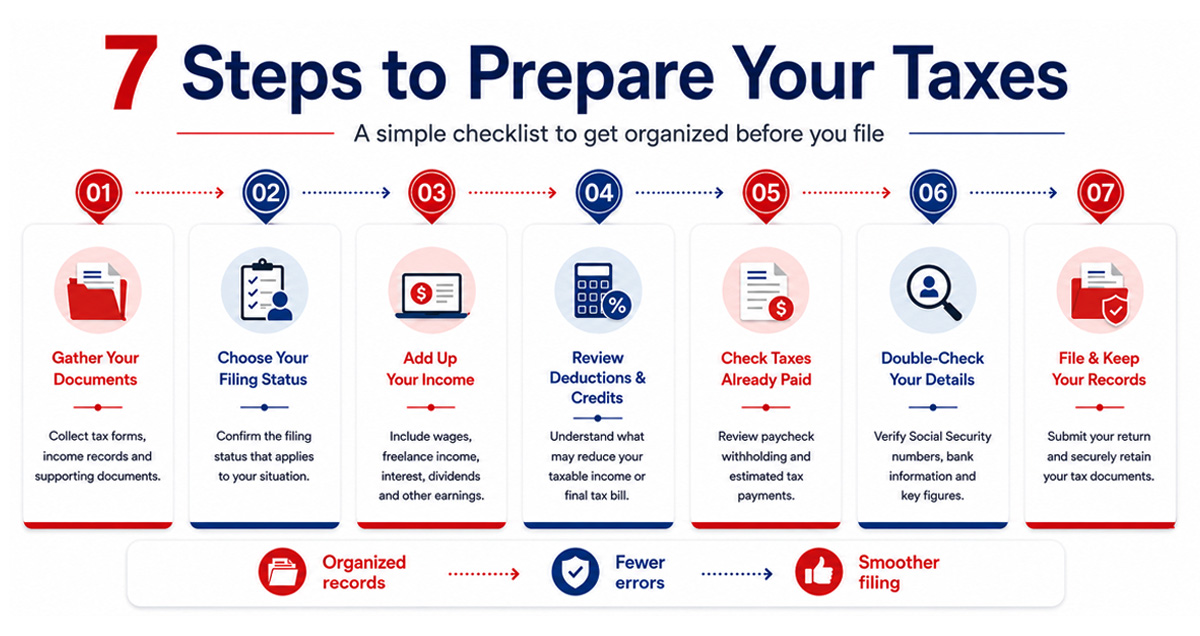
Do not open software or sit down with an accountant until you have everything in front of you. Missing a form and guessing the numbers is the fastest way to trigger a delay.
Single, Married Filing Jointly, Head of Household—this sets your tax brackets and deduction limits. If you got married, divorced, or had a baby recently, don’t just default to whatever status you used last year.
Salary is easy. Don’t forget about cash gigs, interest, dividend payouts, or crypto trades. Match your bank deposits against the forms you received to catch discrepancies early.AI and automation are changing that apprenticeship.
Deductions reduce the total income you’re taxed on. Credits take money directly off your final tax bill. They work differently, and just because your neighbor claimed something doesn’t mean you can.
Compare the tax withheld from your paychecks (plus any estimated quarterly payments) against your actual tax bill. If you get a fat refund, remember: that’s just money you overpaid the government throughout the year.
Wrong Social Security numbers or an incorrect routing number for direct deposit will stall your refund for weeks. Look at every digit twice.
E-filing via software or a pro is faster and reduces typos. Once it’s sent, tuck the records somewhere safe—you’ll want them if you ever need to amend or reference something later.
Easy mode. Check your W-2 for typos, add any minor interest income, take the standard deduction, and send it off.
You need to track expenses as you go, not during a panic session in April. Keep up with quarterly estimated payments and remember that self-employment tax hits differently than normal payroll tax.
Rule number one is keeping business and personal bank accounts strictly separate. Once you start hiring staff or buying heavy equipment, managing taxes yourself turns into a liability.
Selling stocks or crypto quickly generates a paper trail. Keep your original purchase records so you aren’t stuck paying tax on gains you didn’t actually make.
Track every single dime spent on maintenance, property taxes, repairs, and mortgage interest. Depreciation gets weird here, so pay attention to how you log physical assets.
Write out a physical list of every way you made money this year before filling out any forms. It’s too easy to forget a small $400 side job.
If you live in one state and work in another, you’ll likely have to file in both. Every state makes its own rules, so check local guidelines carefully.
If your life fits onto a single W-2, paying someone else is usually a waste of cash—basic tax software gets the job done fine.
Consider hiring a pro once you add self-employment income, rental units, complex investments, multi-state filing, or major life changes to the mix. It’s also the smart move if you owe back taxes or received a confusing letter from the IRS.
Most tax headaches come down to bad organization, not tricky tax laws. Once your paperwork is sorted, the rest falls into place pretty quickly.
If your return involves a business, rental properties, or multi-state income, having an expert look things over can prevent expensive mistakes down the road. IMCA offers straightforward, accurate tax prep services for anyone who would rather hand off the heavy lifting to someone else.
At minimum, your W-2s and any 1099s showing extra income or interest. Homeowners should grab their 1098 mortgage statements, and business owners need clean records of their expenses and receipts.
Usually, yes—especially if you have one main job and take the standard deduction. If you own a business, rent out real estate, or have heavy investments, paying a pro usually saves you more money than it costs.
Don't panic, but don't ignore it either. Depending on the error, you may just need to file a quick amendment using Form 1040-X once the original return is processed.
Hand it off if you run a business, own rental real estate, trade complex assets, earned money in multiple states, or got a notice from the IRS that you don't know how to handle.
Make a master list of every client or platform that paid you before you start. Match your bank statements against your tax documents to make sure nothing slipped through the cracks.
Yes. Tax professionals handle late filings, correct past errors, and submit amended returns all the time.

We use cookies and similar technologies to improve your experience, personalise content, analyse website traffic, and understand how visitors interact with our website. Some technologies may help us identify businesses visiting our website and improve our marketing and services. Some cookies are essential for website functionality.