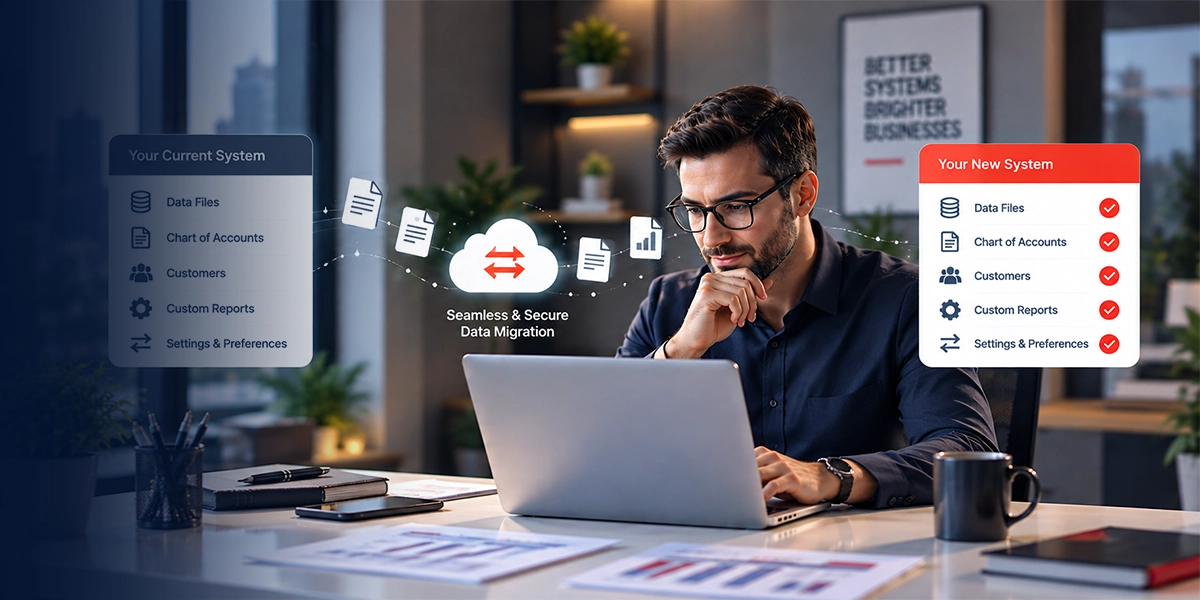
Switch Systems Without Losing Sleep
- Home
- Business Solutions
- System & Data Conversion
Moving to a new accounting system is only part of the transition. Your chart of accounts, balances, customer and supplier records, historical transactions, and other financial information also need to be migrated to the new environment in a usable form.
Indian Muneem (IMCA) provides Data Conversion and accounting system migration support for businesses changing accounting platforms, replacing legacy systems, or reorganizing financial records.
We support the accounting work behind the transition—from data preparation and mapping through conversion, reconciliation, and post-conversion review.
- PRICING
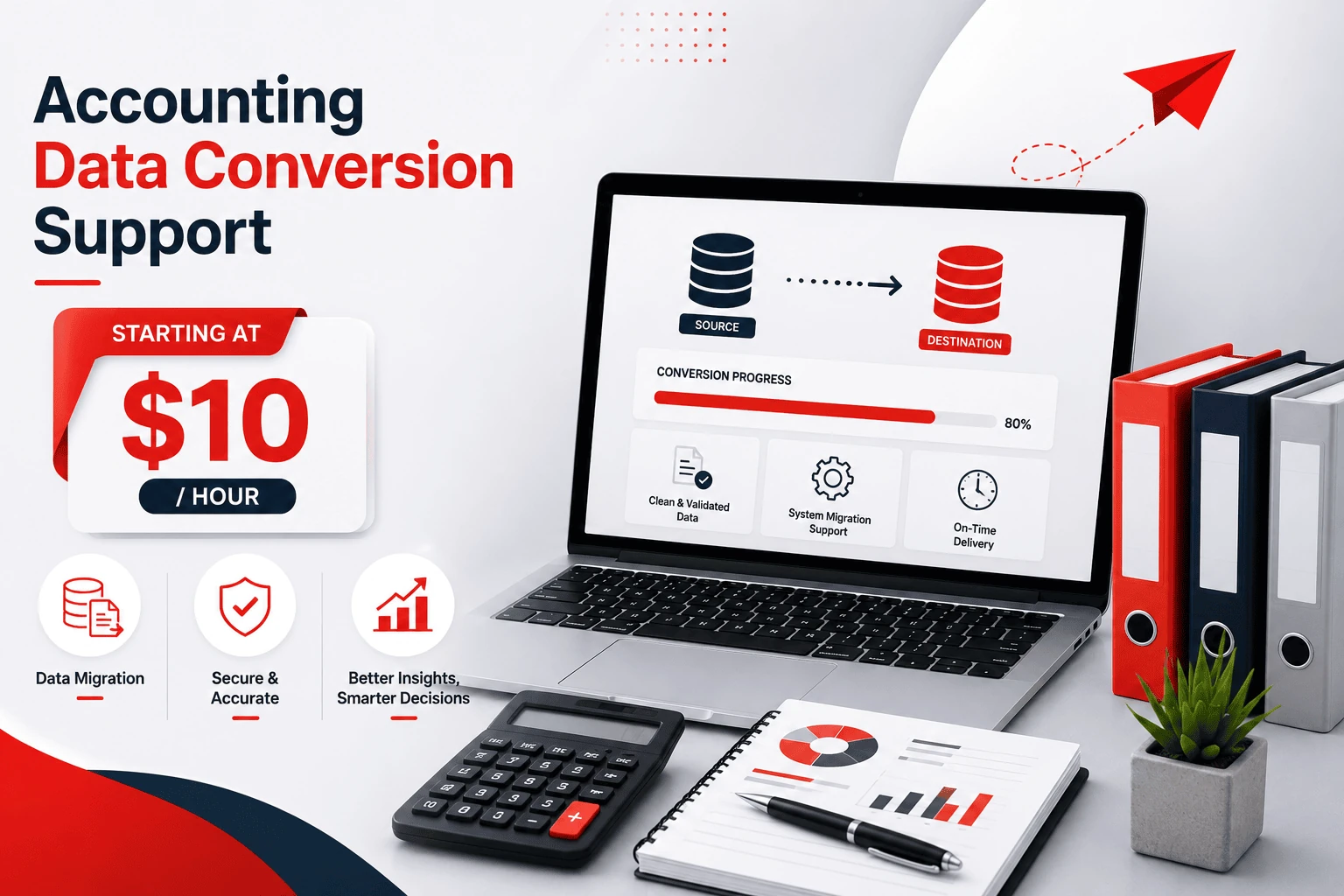
Accounting Data Conversion Support
Get professional Data Conversion and System Migration Services for your accounting and financial records.
Starting at
$10/Hour
- What we support
Data Conversion Support Built Around Your Business
No two accounting migrations involve exactly the same records. The scope depends on your existing system, destination platform, volume and condition of the financial data, historical information required, and how the new accounting environment will be used.
We establish what needs to move before conversion begins.
Financial Data Preparation
Review and organize the accounting information included within the agreed migration scope so that relevant records are ready for conversion.
Chart of Accounts & Balance Mapping
Support the mapping of agreed account structures, opening balances, and related financial information between the source and destination systems.
Customer & Supplier Records
Prepare agreed customer, supplier, and related master records required within the new accounting environment.
Historical Accounting Data
Support the conversion of agreed transaction history and other financial records required for ongoing accounting, reporting, reconciliation, or reference.
Post-Conversion Reconciliation & Review
Review the agreed-upon converted financial information against source records and identify any balances, records, or differences that require further investigation.

Need Accounting Support?
Get skilled accounting professionals to support your firm or business—without the cost of expanding your in-house team.
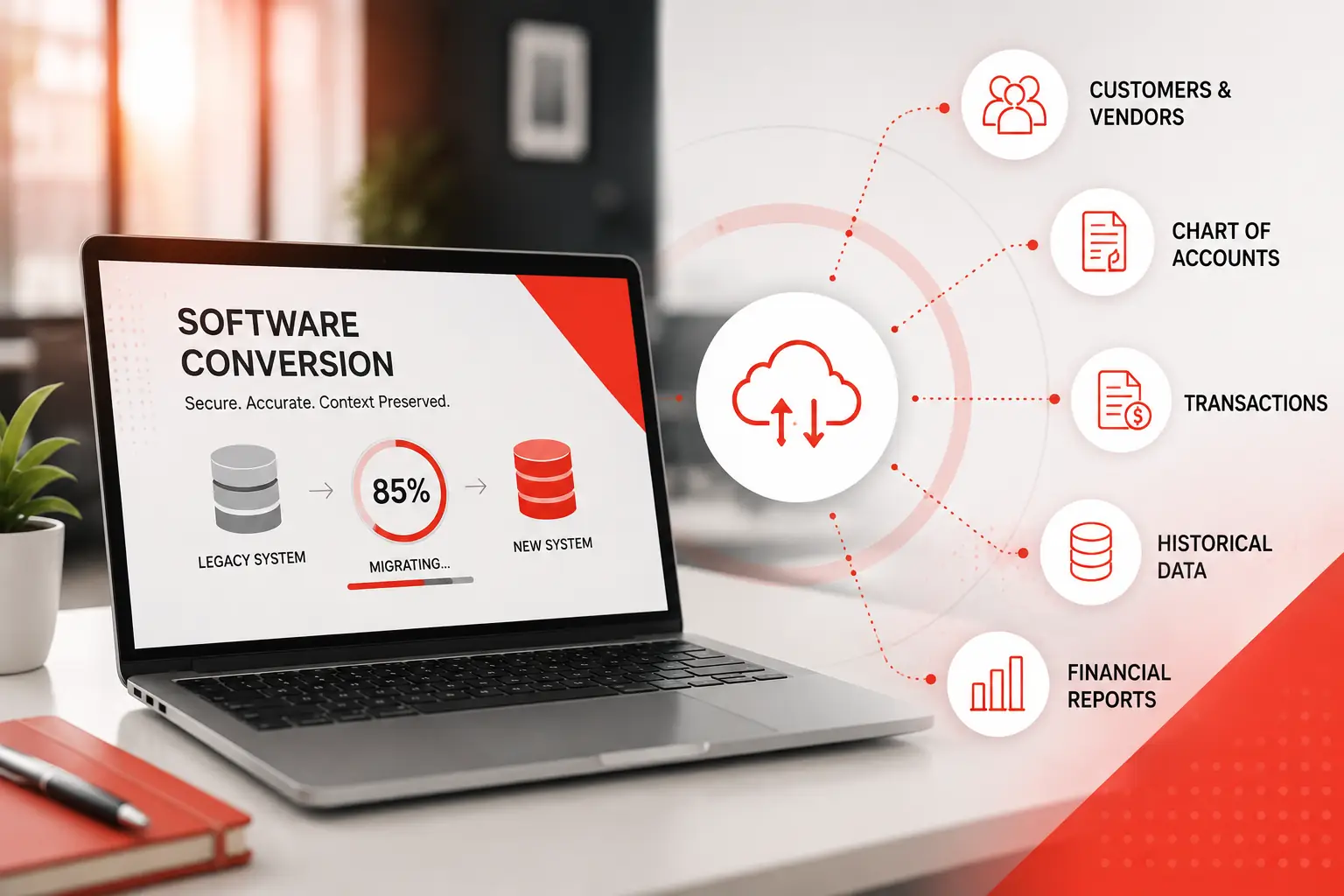
Accounting Software Conversion With Financial Context
Changing accounting software involves more than transferring files between two platforms.
Account structures influence reporting. Opening balances affect the new accounting period. Customer and supplier records may be connected to outstanding transactions, while historical information may still be required for reconciliation and reference.
Our Accounting Software Conversion and Financial Data Conversion support focuses on preserving this accounting context throughout the transition.
IMCA works with supported accounting systems and coordinates with your finance team where decisions, clarification, or business-specific knowledge are required.
How We Work With Your Business
❮
01
Understand the Existing & New Systems
We review the source environment, the destination accounting system, the financial information involved, and your finance team's requirements.
02
Review & Prepare the Data
Records within the agreed scope are reviewed and organized for conversion. Missing, inconsistent, or unclear information is identified for follow-up.
03
Map the Financial Information
Relevant accounts, balances, master records, and other agreed financial information are mapped according to the requirements of the destination environment.
04
Convert the Agreed Data
The financial information within scope is prepared and transferred according to the agreed conversion approach.
05
Validate & Reconcile
Converted information is reviewed against agreed source records. Relevant balances and accounting information are checked, and any differences are identified for investigation.
06
Handover & Post-Conversion Support
Following the agreed review, the converted accounting information is handed over to your team. Where required, IMCA can continue to support reconciliation or other agreed accounting work following the transition.
A structured system transition, with your financial records accounted for at every stage.
Talk to Our Team
❯
What Changes When Data Conversion Is Outsourced?
IN-HOUSE
Managing Data Conversion Entirely In-House
Your finance team manages conversion work alongside day-to-day accounting
Financial records need to be reviewed and prepared internally before migration
Account structures, balances, and historical records need to be mapped between systems
Reconciliation and validation add to the team's workload during the transition
Migration work competes with month-end, reporting, and other finance priorities
OUTSOURCED SUPPORT
Working With Indian Muneem
Agreed preparation and conversion activities are handled by an accounting support team
Financial records are reviewed and organized according to the agreed migration scope
Account structures, balances, and relevant records are mapped for the destination environment
Converted financial information is checked against agreed source records
Your finance team retains oversight and decisions requiring business context
- FAQs
Frequently Asked Questions
Accounting data conversion involves preparing and transferring financial information from an existing accounting environment into a format suitable for a new system. Depending on the project, this may include account structures, balances, customer and supplier records, historical transactions, and other accounting information.
An Accounting System Conversion may be required when replacing legacy software, adopting a new accounting platform, consolidating financial records, or changing systems as the business and its accounting requirements evolve.
This depends on the systems involved and the agreed scope. It may include the chart of accounts, opening balances, customer and supplier records, historical transactions, and other financial information required in the new environment.
Yes, historical accounting information can form part of the migration where the source data, destination system, and project scope support it. We determine which historical information needs to be moved before conversion begins.
We review the source system, destination platform, available financial information, and conversion requirements before confirming the appropriate scope and approach.
The validation process depends on the engagement. Agreed balances and financial information can be reviewed against source records, with differences or items requiring further investigation identified for review.